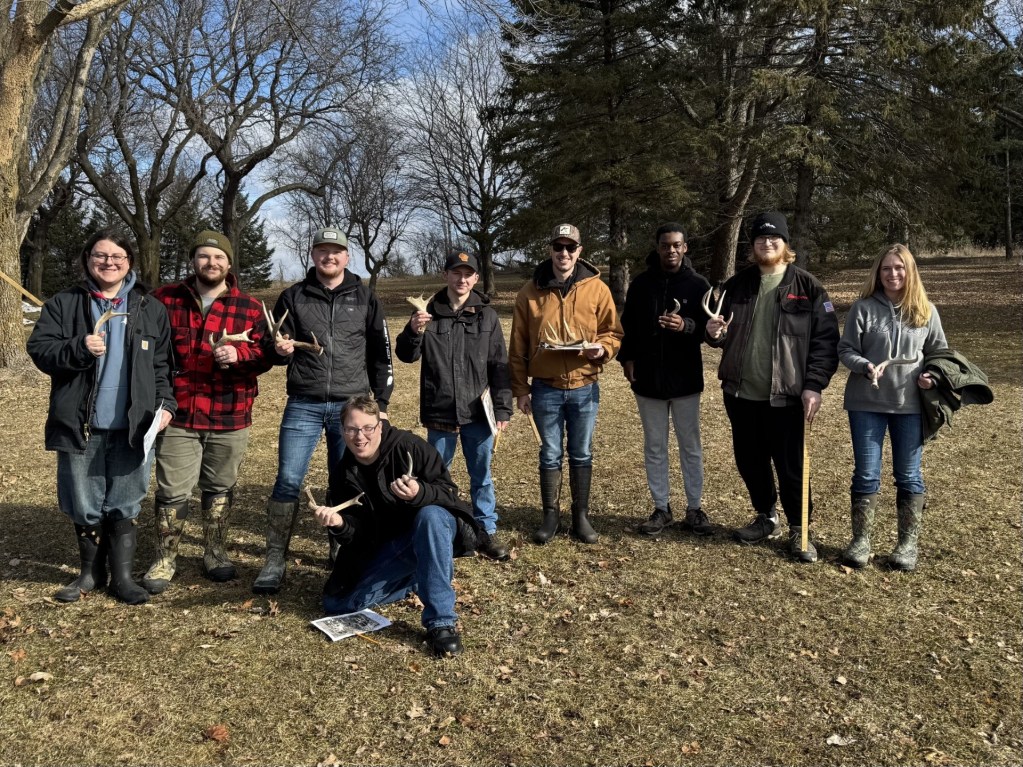
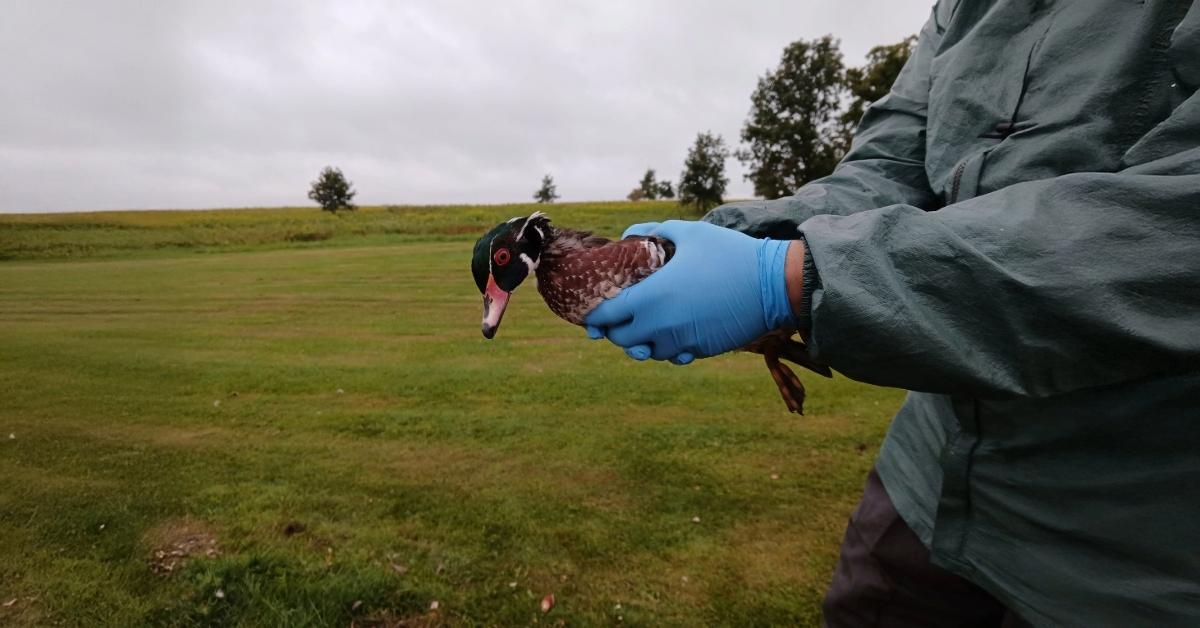
Just days into the new semester, Natural Resources Technician students traded their desks for nature’s classroom: the Collins Marsh Wildlife Area in Manitowoc County.
Arriving before dawn, students in Wildlife Management class joined forces with the Wisconsin Department of Natural Resources (WDNR) to assist with its annual waterfowl banding efforts.
The hands-on experience is more than just a field trip. It’s an essential part of the WDNR’s work to gather vital population data. By placing small, numbered leg bands on the ducks, students help track birds’ movements, including nesting success and migration patterns. This work also informs regulatory decisions that are made regarding various species of waterfowl.
“Wisconsin is part of the Mississippi Flyway and waterfowl tend to follow specific migration routes,” explains Paul Groell, department chair of Natural Resources. “These birds usually follow the same patterns but could still end up anywhere. Using band return data, we’ve seen these birds travel to Alaska, Canada, the Caribbean and even Iceland.”
The annual duck banding trip has been a cornerstone of the Natural Resources Technician curriculum since 2010, giving students the unique opportunity to participate in real-world conservation efforts right in their own backyard.