“I was in this classroom doing the scenario, and the next thing I remember is Les James yelling at me to wake up… wake up.”
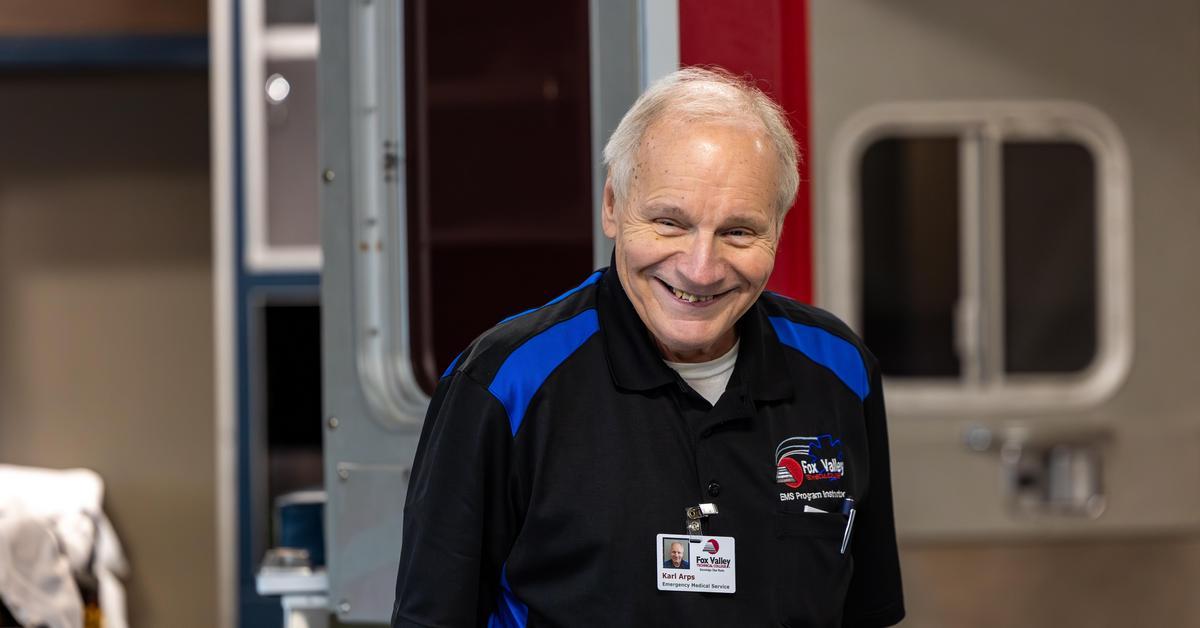
Longtime Emergency Medical Services (EMS) adjunct instructor Karl Arps recounts the moment when life took a dramatic turn for him and his students. He was in the back of a practice ambulance, simulating a heart attack scenario for students in an EMT-basic course, when things got real.
“I saw his hand curl outward and his head kind of turned away,” explains student Logan Lehrer. “My initial thought was that he’s doing another scenario on me and I’ve got to figure out these new symptoms.”
But Karl was not acting or testing the students. He was in cardiac arrest.
“We noticed Karl starting to move his arms out, and fixating a little bit,” says student Sofie Devalk, who also responded to the incident. “His eyes were rolling back and we could see the color loss.”
Immediately, instructor Traci Blondeau and the students took command and began the chain of survival.
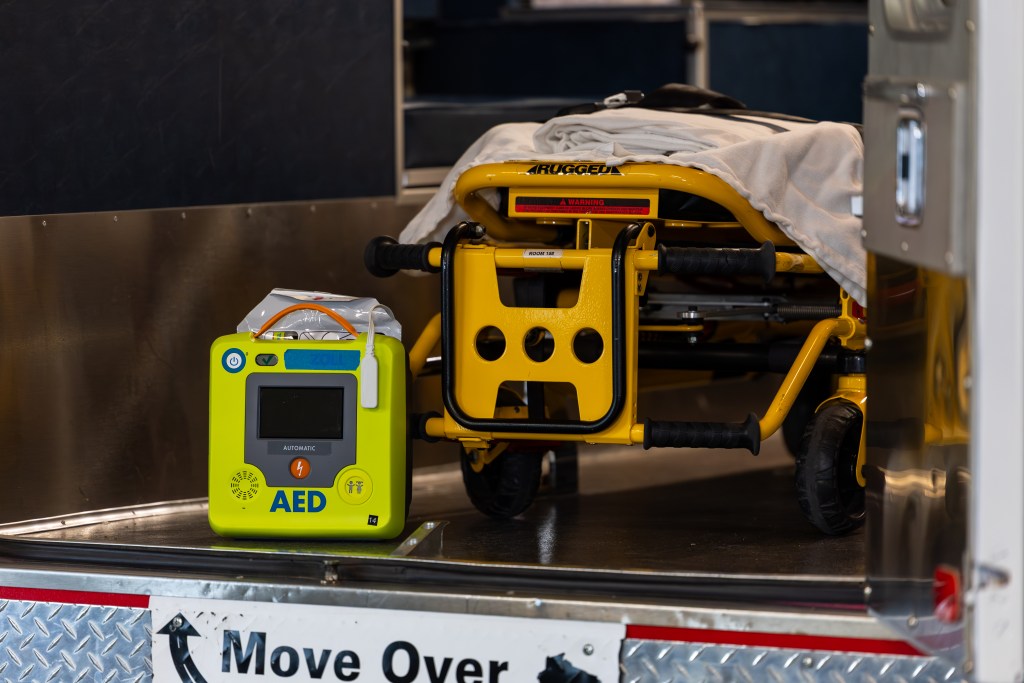
“So now it’s real,” Logan says. “Our instructor confirmed Karl didn’t have a pulse. And she sent me to grab an AED.”
“CPR was started within 40 seconds of recognition,” explains EMS instructor Les James. “The AED was applied in 90 seconds and two shocks were delivered. They definitely were following the chain of survival. Everyone did what they had to do.”
After almost four and a half minutes of CPR — and two life-saving shocks — Karl was stabilized. He was taken by ambulance to the hospital where he underwent triple bypass surgery.
“I’m one in one million. I feel like I’m one in one trillion. I had a heart attack, a ‘widow maker.’ I was dead.”
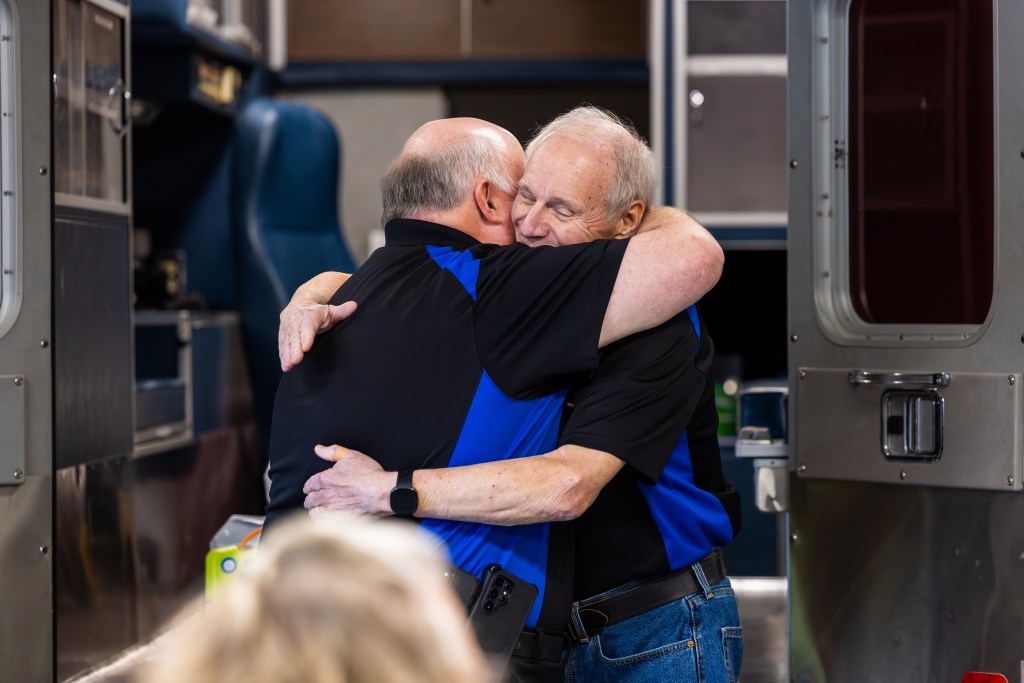
According to the American Red Cross, fewer than 10% of people survive cardiac arrest outside of the hospital. With immediate intervention – like the rapid reaction from students in the EMT class – Karl’s recovery is a unique story.
“I guess the entire hospital was talking about my incident,” Karl jokes. “Every time a nurse or a doctor came in, they would say, ‘so you’re the one who survived.’ And yes, I am.”
Karl has been out of the hospital for about a month and is ready to start physical therapy. He is also ready to get back to work, teasing that he has been negotiating with college leadership to pin down a return-to-work date.
“Everybody at Fox Valley Tech has been amazing to me and wondering how I’m doing,” Karl shares. “Dean John Sorenson calls me; I don’t know how many times he’s called me. And Les is Les; he called me several times. Everybody that I’ve known. I didn’t know I had so many friends in this world.”
In the weeks since his cardiac arrest, Karl has had time to reflect on the moment his students became his lifeline. He speaks modestly about his recovery, but the impact of their training and their calm response under pressure has left a lasting impression.
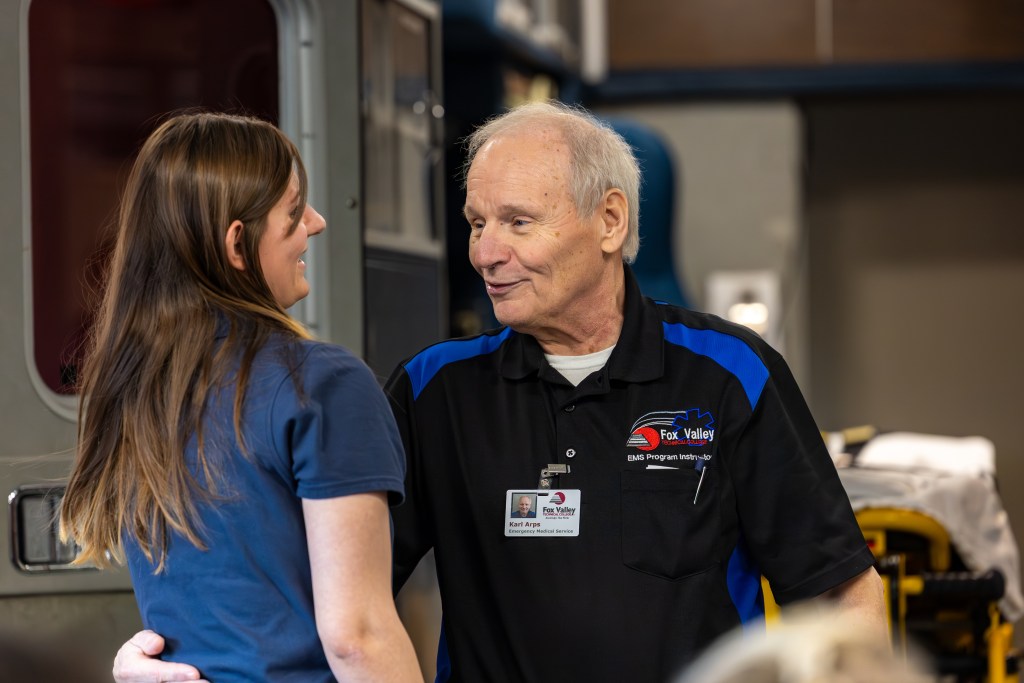
“What can I say to six students that saved my life? Thank you doesn’t seem like enough. They learned it correctly and they put it into action. It’s something that I will never forget.”